View from the top of a mountain of the city lights at twilight.

Reliability in power electronics: key to integrating renewable generation

Integrating all the renewable energy generation planned for the coming years presents a major challenge for the energy system. We are moving towards a decentralized, distributed, and flexible model, which requires digitalization and advanced control to guarantee its stability and efficiency.

In this context, power electronics becomes an essential pillar. Thanks to it, it is possible to regulate and transform energy precisely and efficiently, enabling digital supply management in which converters, inverters, STATCOMs, and BESS (battery energy storage systems) play a fundamental role.
But for this entire network to operate safely and consistently, it is essential to guarantee the maximum reliability of each of its components.

The importance of reliability in power electronics systems

The reliability of a system composed of different electronic components can be theoretically calculated using the Mean Time Between Failures (MTBF) of each component. In an exponential distribution, the overall system reliability (R) is obtained by multiplying the reliability of each individual component:

R(t) = e-λ(1)t * e-λ(2)t * … e-λ(n-1)t * e-λ(n)t

Icono R(t) is the reliability of the system

Icono λ represents the component failure rate (1 / MTBF).

Icono t is the operating time.

Thus, even a single component with a high failure rate can significantly affect the overall reliability of the system.

The critical role of cooling in system reliability

Among the most sensitive components of power electronics equipment, the cooling system stands out. Its function is essential: to maintain the operating temperature within safe limits and prevent premature degradation of the semiconductors.

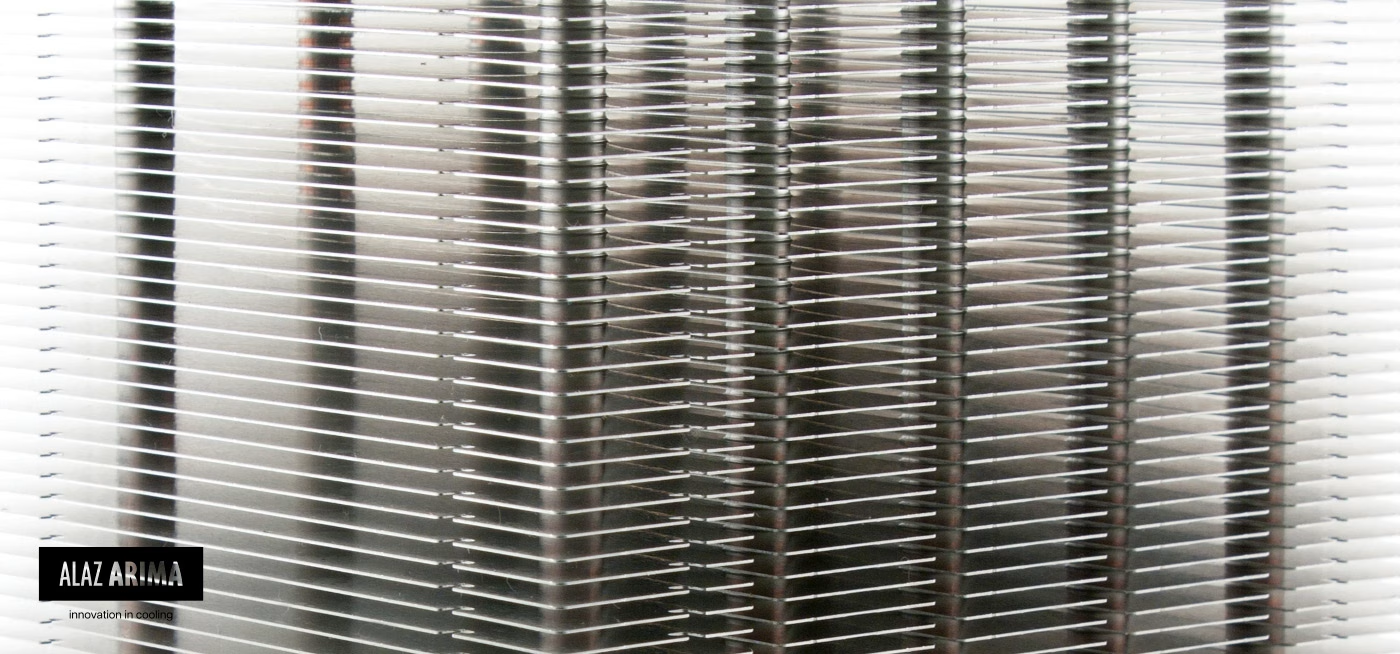
Passive cooling solutions, such as aluminum heat sinks, offer high reliability because they have no moving parts and require no maintenance. However, their heat dissipation capacity can be limited as power density increases.

To overcome this limitation, active liquid cooling systems are commonly used, incorporating pumps, valves, or expansion tanks. While these improve thermal capacity, they reduce overall reliability due to the increased number of components susceptible to failure.

Passive liquid cooling: high efficiency without sacrificing reliability

Alternatively, passive phase-change liquid cooling systems offer an innovative and balanced solution.
These systems combine the high heat dissipation capacity —characteristic of liquid cooling— with the reliability and low maintenance typical of passive solutions.

By changing the phase of the internal fluid, large amounts of heat can be transferred without the need for pumping or additional electrical power consumption.
This results in superior thermal performance, a longer equipment lifespan and a reduction in failure modes.

Forma orgánica en degradado rosa antiguo a gris azulado

Conclusion: reliability and efficiency, the basis of the energy future

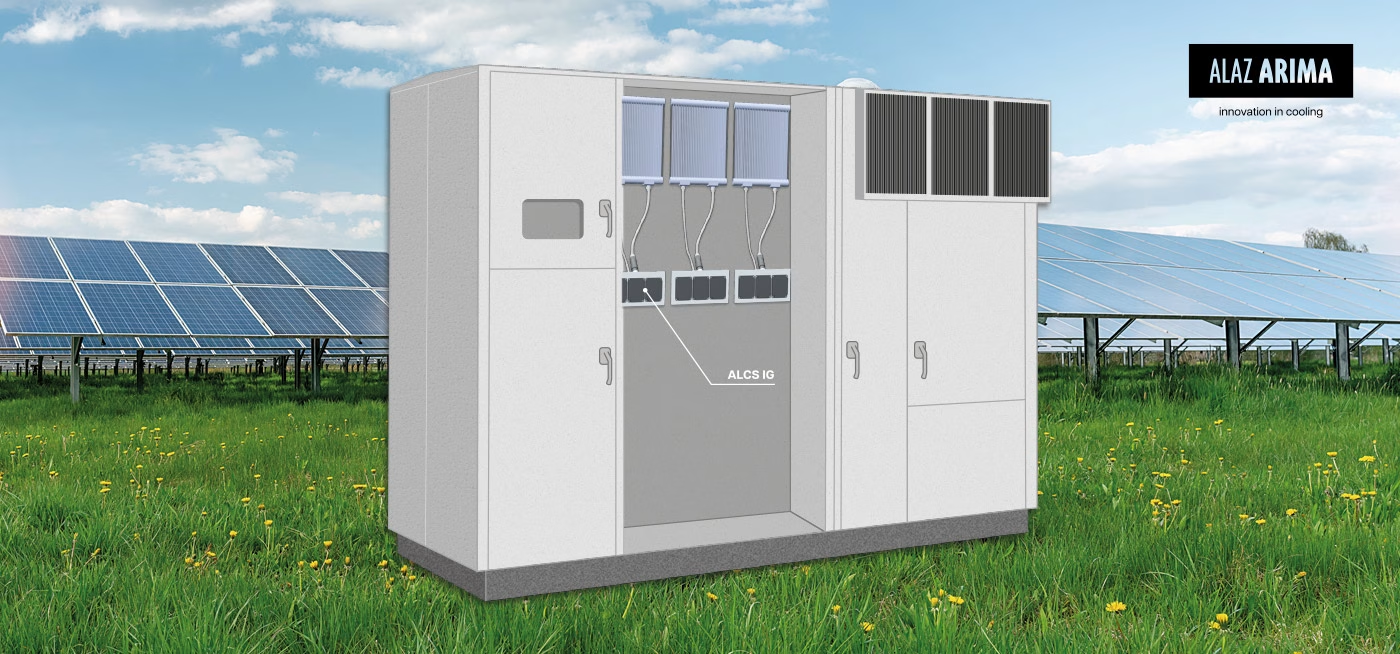
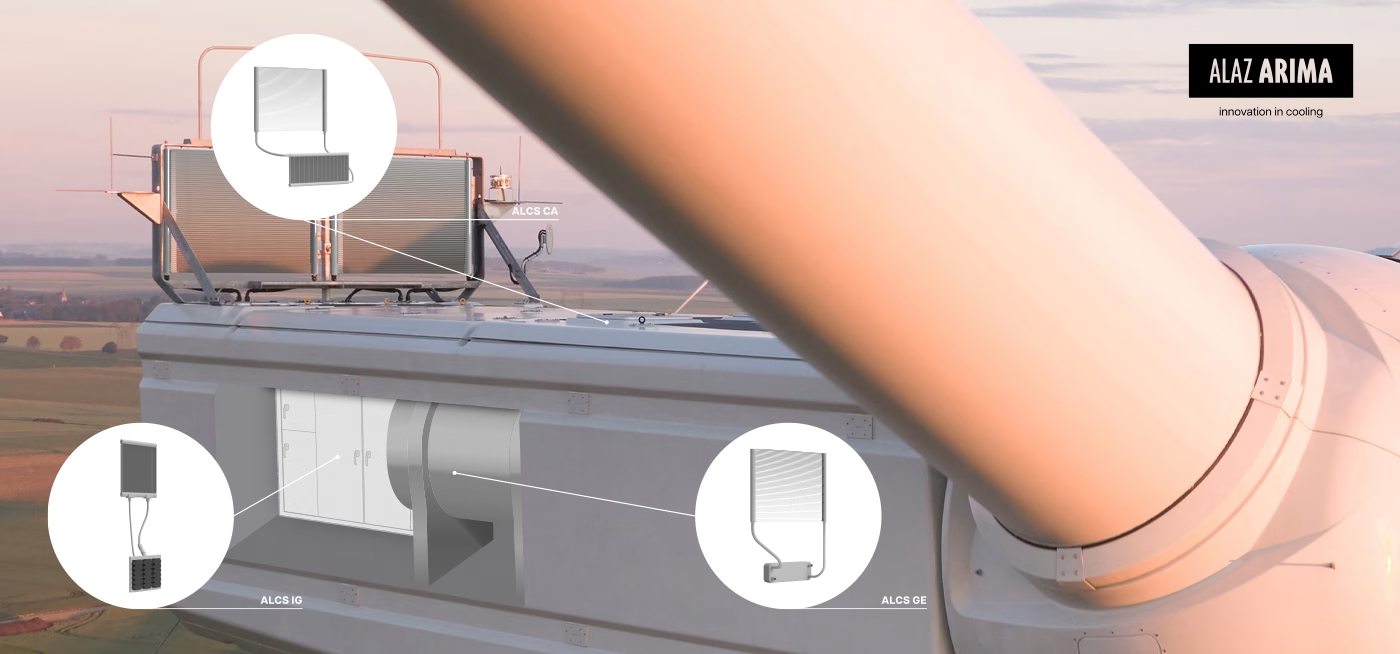
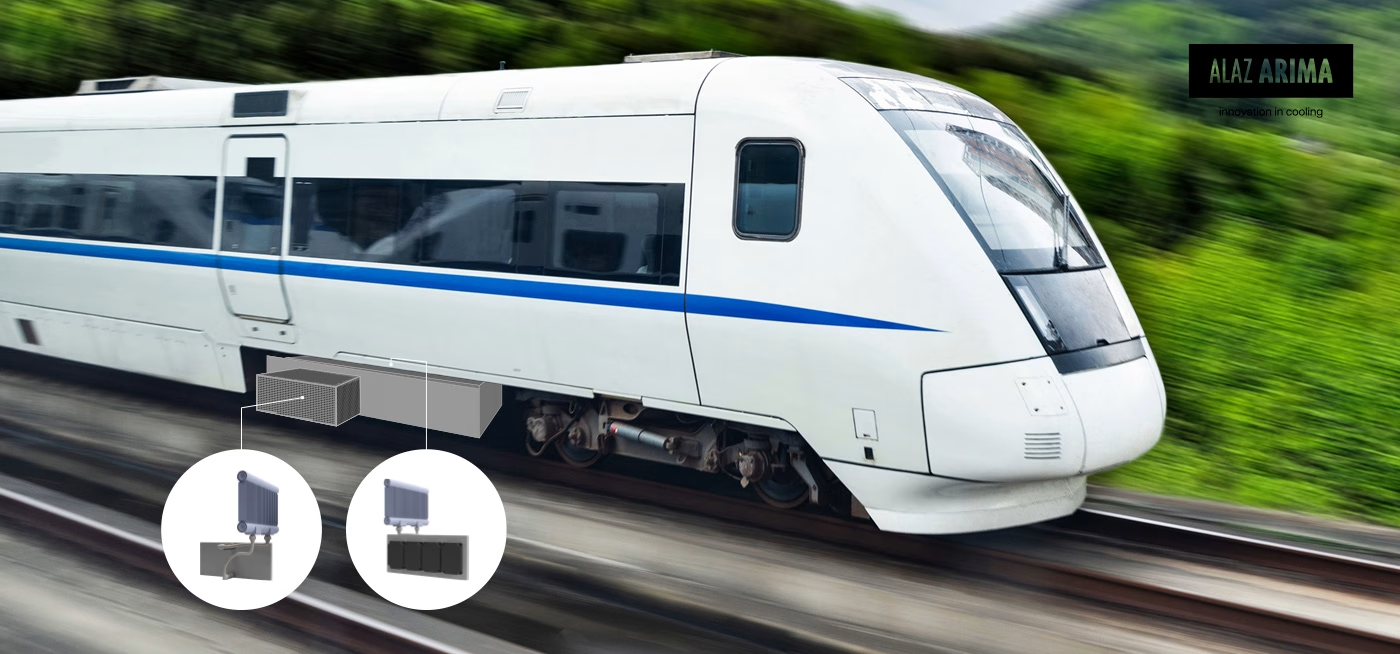
At ALAZ ARIMA, we develop high-efficiency passive cooling solutions that contribute to improving the reliability of power electronics systems used in key sectors such as photovoltaic solar energy, wind power, and electric mobility.

These technologies enable us to meet the challenge of renewable energy integration with more robust, sustainable, and efficient systems, ready for a digital and decentralized energy future.

👉 Discover our cooling solutions for:

Leave a Reply

Your email address will not be published. Required fields are marked *